

Why do many businesses struggle to grow even when they have good products or services?
The answer is usually not about the market. About the challenges they face inside their own company.
Most businesses today face operational hurdles that slow down growth, reduce efficiency, and create unnecessary pressure on their teams. These challenges may seem different at first. They are all about managing too much with too little, whether it’s people, time, or expertise.
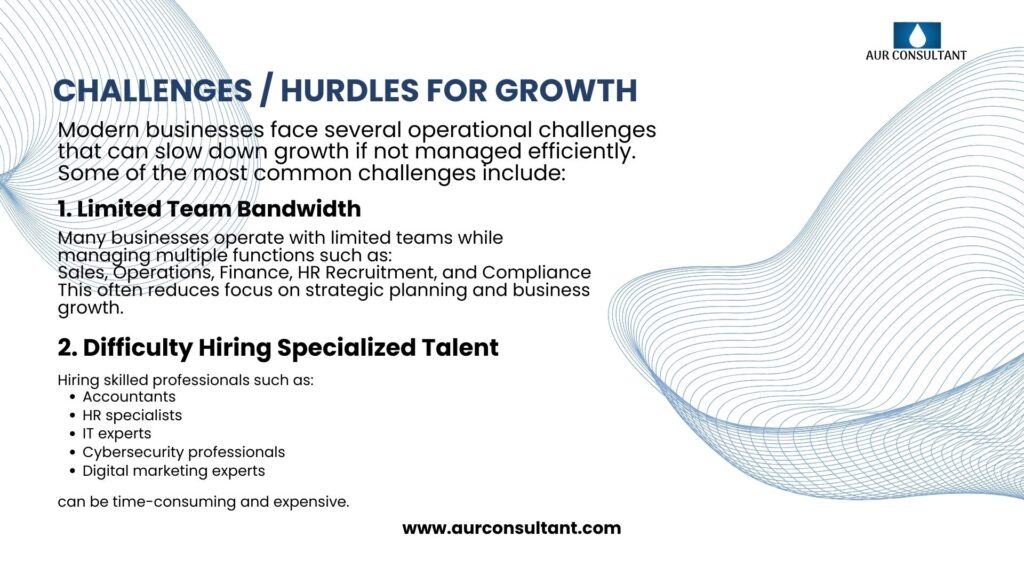
One of the biggest challenges businesses face is that their managers have too much to handle.
In companies, especially ones that are growing, a small group of leaders or managers has to handle multiple jobs. Like sales, operations, finance, HR, and compliance.
This might work okay at first. Eventually, it becomes too much. When leaders are busy with tasks, they do not have time to think about strategy, innovation, or long-term planning. Over time, this slows down decision-making. Stops the business from reaching its full potential.
As businesses grow, they need people with skills. Jobs like accountants, HR professionals, IT experts, and digital marketing specialists require a lot of expertise.
Hiring the right people for these jobs is often hard. It takes time, money, and effort. From finding candidates and doing interviews to training and keeping them.
For businesses, especially ones that are growing, it’s not practical or sustainable to build a full team of specialists.
Another big concern for businesses today is the increasing complexity of rules and regulations. From tax laws and labor laws to governance requirements, Businesses have to follow all these rules consistently. These rules are always changing, and even small mistakes or delays can result in penalties and reputational damage.
Running a business comes with many fixed costs such as employee salaries, office expenses, software licenses, and training costs.
While these are necessary, they create financial pressure, especially when growth is not consistent. High fixed costs reduce flexibility and make it harder to adapt quickly.
Scalability is one of the most critical challenges businesses face as they grow. Expanding operations requires not just more revenue but also the ability to handle more work efficiently. Hiring and training take time, and existing teams may become overwhelmed, creating a gap between demand and execution.
Outsourcing is when a company gets help for certain jobs. They do not do these jobs themselves. Instead, they get experts from companies to do the work.
Companies do not have to hire a lot of employees to do every job. They can work with companies that already know how to do these jobs. This way, the work gets done faster and better. The company does not have to spend time and money to train employees.
For example, a company might get help from a consulting firm to find employees. They do not have to create a department to do this job. This way, they can find employees quickly and focus on the main things they do.
So outsourcing helps companies work better by getting help from experts. This means they can focus on growing their business and doing what they do best. Outsourcing is a way for companies to be smarter about how they work.
They use Outsourcing to get the help they need and stay focused on their go.
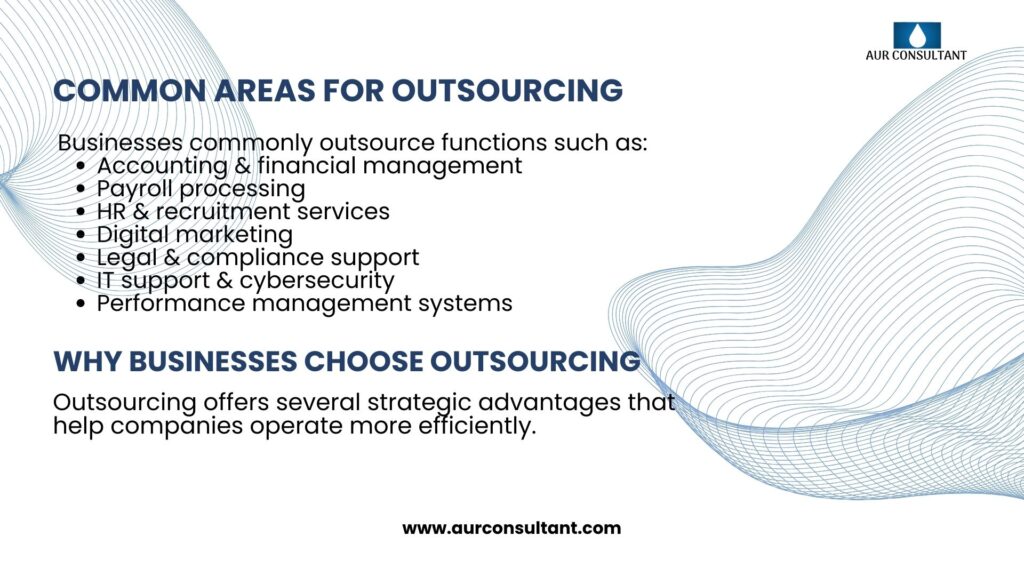
Businesses commonly outsource the following functions:
• Accounting & Financial Management
• Payroll Processing
• HR & Recruitment Services
• Digital Marketing
• Legal & Compliance Support
• IT Support & Cybersecurity
• Performance Management Systems
Businesses today choose outsourcing not just as a cost-saving method but as a strategic approach to improve efficiency, access expertise, and scale operations smoothly.
Managing every function internally requires time, effort, and continuous investment in hiring, training, and infrastructure. As businesses grow, handling everything in-house often leads to operational overload and slower execution.
Outsourcing helps solve this by allowing companies to delegate non-core yet essential functions to experienced professionals. These service providers already have the required domain expertise, tools, and processes in place, which ensures better quality of work and faster turnaround time.
It also gives businesses the flexibility to scale services up or down based on their needs — without the challenges of hiring or downsizing teams.
In simple terms, outsourcing allows businesses to stay focused on growth while ensuring that critical support functions are managed efficiently.
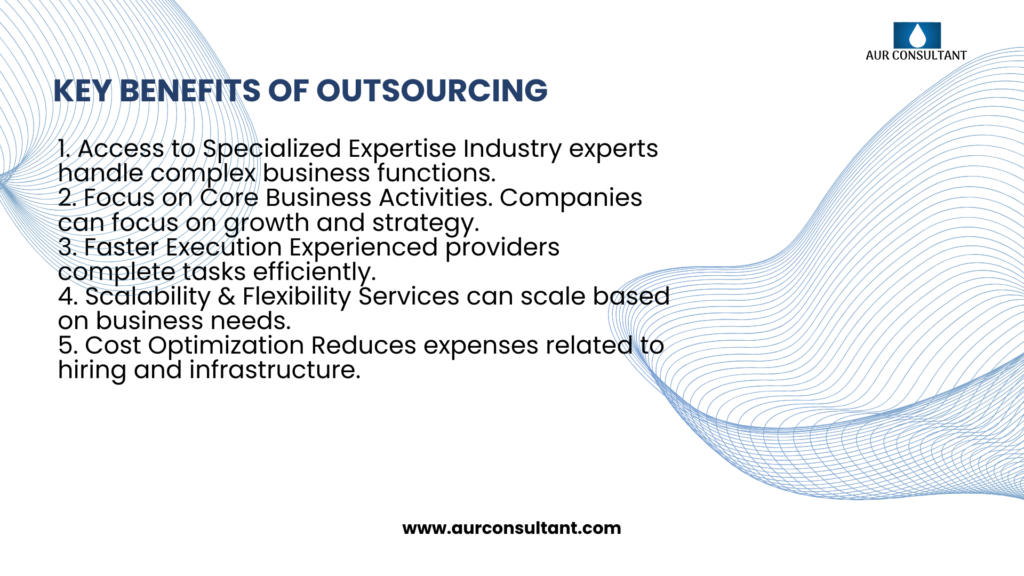
Outsourcing is a way for businesses to work smarter. It helps them to get things done easily cut down on extra work and think about how to grow.
When businesses outsource they can get help from people who’re really good at what they do. These experts know a lot about their field. Have done the work before.
This means businesses do not have to spend time and money finding and training people. They can just work with the experts who already know the ways to do things what tools to use and what the industry standards are. This way the work is better. There are fewer mistakes.
When businesses outsource the things they do not need to do themselves, they can focus on what’s really important. They can think about how to make their business grow like finding customers and making new plans.
The people in charge can spend time thinking about big decisions and what to do in the future instead of getting caught up in everyday tasks. Outsourcing helps businesses focus on what matters, which is their core business activities.
Outsourcing partners are ready to go. They already have a system in place, the tools, and a team that knows what to do.
This means they can get started away and do the work quickly and efficiently. It is faster than trying to build a team from scratch.. When things get done faster, businesses can see the results sooner and be more productive. Outsourcing really helps with execution.
One of the things about outsourcing is that businesses can change how much work they need done.
They can add work or do less without having to worry about hiring new people or letting others go. This is really helpful when businesses are growing or when things are changing. Outsourcing gives them the flexibility they need.
Outsourcing can also help businesses save money. Of paying for salaries, equipment, software, and training, they only pay for what they need. This cuts down on costs and helps businesses use their money more wisely. Outsourcing is a way for businesses to optimize their costs and work smarter.
When it comes to business, some things are really important for the day to day work.. They do not really help the business grow in a big way. Organizations usually start outsourcing these functions.
This means that the business can make sure that these important processes are done well.
At the time, the people who work inside the company can focus on the things that are really important for the business.
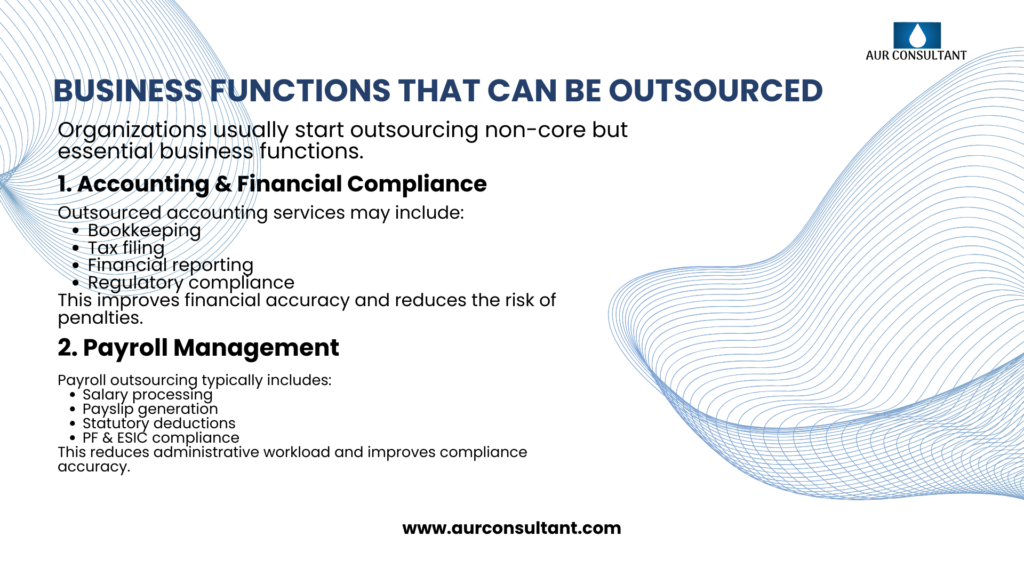
Accounting is an important function for any business. It has an impact on how healthy the business is financially and if the business is following all the rules. When a business outsources accounting, it typically includes these things. Bookkeeping is one of them. This means keeping track of all the money that comes in and goes out every day. Then there is Tax Filing. This means doing all the paperwork for taxes on time. This includes things like GST and TDS. Financial Reporting is another thing. This means making reports that show how money the business made and how much it spent. Regulatory Compliance is also important. This means making sure the business is following all the rules. Outsourcing accounting helps the business to be more accurate with money. It also helps the business to be more open and honest about money. It reduces the risk of making mistakes or getting in trouble for not following the rules.
Payroll management is a big job. It involves a lot of things that need to be done correctly and on time. It also needs to follow all the laws about work. When a business outsources payroll, it typically includes these things. Salary Processing is one of them. This means calculating how much money each person should get and making sure they get it on time.
Then there is Payslip Generation. This means making a report that shows how money each person got and what was taken out for taxes. Statutory Deductions are another thing. This means taking out money for things like PF and ESIC. Compliance Management is also important. This means making sure the business is following all the laws about work. By outsourcing payroll, the business can reduce the amount of work it has to do. It can also avoid making mistakes when it comes to paying people. It can make sure that it is following all the rules about work.
Finding talent is a big task for businesses. Outsourcing HR and recruitment helps with:
This speeds up hiring. Improves the quality of hires. HR and recruitment services help businesses.
Digital marketing is crucial for businesses. It helps build brand visibility, generate leads, and drive growth. Businesses often outsource marketing because it requires planning, creativity, and technical expertise. Digital marketing is important.
Outsourced digital marketing typically includes:
Legal and compliance requirements are complex. Outsourcing this function helps businesses handle:
This ensures businesses operate within boundaries and avoid penalties. Legal support helps businesses.
Technology plays a role in business operations. IT outsourcing includes:
This ensures operations, minimizes downtime, and protects sensitive business data. IT support helps businesses.
A Performance Management System (PMS) helps organizations manage employee performance. Many businesses lack a system, which leads to expectations. Outsourcing PMS helps implement a defined process. PMS helps businesses.
A typical PMS framework includes:
1. Planning & Goal Setting: Defining roles, responsibilities and key performance indicators (KPIs).
2. Coaching: Tracking performance and providing feedback.
3. Mentoring: Supporting employees with training and mentorship.
4. Evaluating: Assessing progress against goals.
5. Rewarding & Recognizing: Rewarding performers.
6.Following Up: Creating development plans.
In every business, there is a factor that is considered when making business decisions.
In the case of in-house staff, the business incurs more expenses than just the salaries of the staff. There are other expenses that come with employing staff. They include:
All these expenses are fixed, which means that the business will still incur them even when there is little work to be done or when the staff is not doing well.
In the case of outsourcing, the business only incurs what it needs. This changes fixed expenses to expenses that are easy to control.
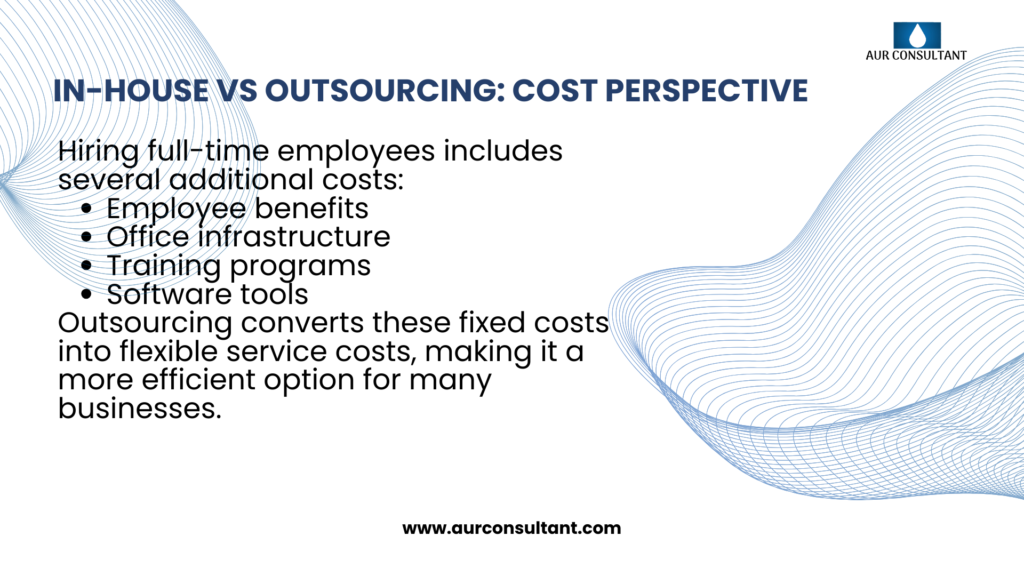
Outsourcing also saves the business from other expenses that are incurred when employing staff. This is because there are no more employing staff, training staff, and maintaining staff. All these expenses are eliminated in outsourcing, making it a better alternative for businesses that are growing and need to save money.
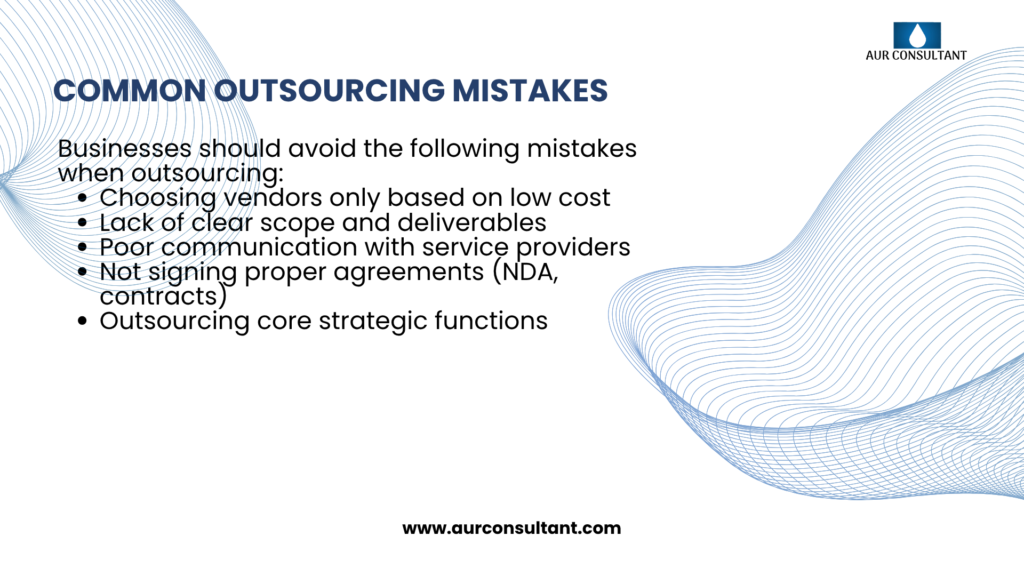
Although outsourcing provides numerous benefits to organizations, it can only achieve this if done in an appropriate manner.
Most organizations face difficulties not because outsourcing is not effective but because they are doing it wrong.
The most common error in outsourcing is selecting a vendor based solely on the lowest possible price.
Even though the cost is an important factor in selecting vendors, compromising quality can prove to be costly in the long run. Therefore, it is always advisable to select vendors based on their expertise and reliability.
Outsourcing can turn out to be unstructured if not done in an appropriate manner. Organizations should always ensure that they define the scope of work clearly to avoid confusion during the execution process. Both parties can stay on the same page and remain accountable when they clearly understand what needs to be done, when it should be done, and what is expected of them. Without a clear scope, projects may face delays, go off track, and fail to meet expectations.
Outsourcing does not mean disconnecting from the process. Organizations should always ensure they communicate with service providers to avoid any confusion during execution. Regular updates, feedback, and clear instructions help maintain alignment and improve overall efficiency. A lack of proper communication can lead to delays, errors, and outcomes that do not meet business expectations.
Not creating formal agreements with vendors is a big mistake when outsourcing. By having clear legal agreements in place, businesses can protect their sensitive information, business processes, and expectations. Without an NDA or a well-defined contract, there is a higher risk of data leaks, misunderstandings, and disputes over deliverables, deadlines, or payments. A strong agreement ensures confidentiality, clearly defines roles and responsibilities, and provides legal protection for both parties. This makes the outsourcing relationship more transparent and trustworthy.
Businesses aiming to grow without increasing their internal workload are increasingly turning to outsourcing as a smart and efficient solution. Instead of hiring full-time employees for every task, companies now prefer to collaborate with skilled freelancers and agencies through trusted platforms.
Choosing the right platform is crucial—it should be reliable, easy to use, and aligned with your business needs. Several outsourcing platforms stand out in 2026 due to their popularity, quality talent pool, and flexibility. These platforms support everything from small one-time tasks to large, long-term projects.
The right outsourcing platform depends on your business goals and project requirements:
Outsourcing has become a potent tool in the hands of businesses that seek to run their organizations in a more efficient manner.
It allows businesses to enhance their efficiency, lower their costs Gain access to expertise without incurring any long-term obligations.
In this way, by outsourcing non-essential yet vital business processes, organizations can move their focus towards more innovative and expansion-oriented business practices.
Outsourcing can help businesses become more productive and flexible in their operations.
This makes outsourcing for business growth a powerful strategy for modern businesses.

Your honest partner in the search for the best